Venezuela and the United States: What to Know and What is Next
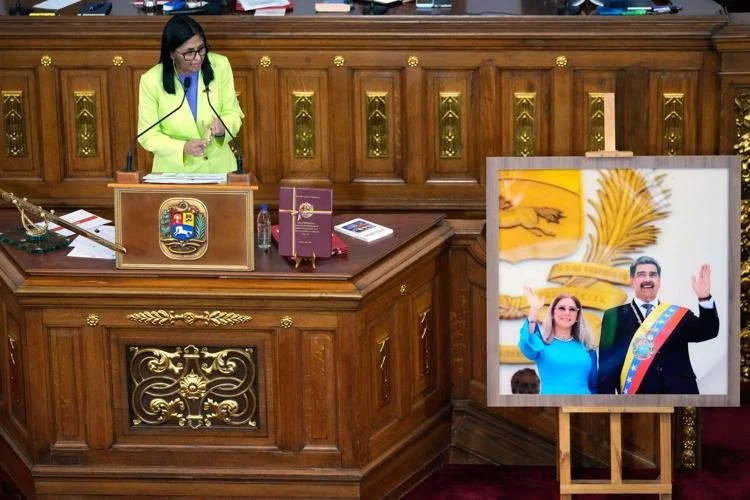
Photo by Ariana Cubillos.
The United States and Venezuela have had a complicated relationship for close to two centuries—one that has become more complicated with the capture and indictment of Venezuelan president Maduró and his wife on January 3rd, 2026. Maduró is currently facing charges for narcoterrorism in the United States. The decision by the Trump Administration to capture Maduro came as a shock for many.
There is no surprise, however, when it comes to the reactions of many Venezuelan citizens who silently rejoiced upon hearing the news of their president’s capture. Since Maduró’s rise to the presidency in 2013, his administration has been known for its repression and violation of human rights, as observed by Time. Yet no country had intervened until now. Thus, the question becomes what exactly led to the United States decision to intervene when it did?
The United States did not intervene for the sake of providing reprieve for Venezuelan citizens; rather, the U.S intervened for control of Venezuela’s natural resources. Venezuela is a hot spot for natural resources, which include the world’s largest oil reserves as well as gas and mineral reserves. Venezuelan minerals such as coltan, niobium-bearing minerals, and bauxite have been deemed critical for the United States according to the U.S. Geological Survey. The U.S.’s desire for these natural resources has become abundantly clear with President Trump’s demanding control of the oil sector in Venezuela, or, as he stated on Truth Social, that Venezuela should return “all of the Oil, Land, and other Assets that they previously stole from us.”
The statement that Venezuela stole oil from the United States is highly controversial and extremely complicated, as is much of the history between the United States and Venezuela. Prior to 1976, when President Pérez of Venezuela nationalized the oil industry and established the Petróleos de Venezuela SA (PDVSA), a state owned oil company, foreign oil companies were allowed to extract and sell Venezuelan oil. However, following the establishment of PDVSA, GovFacts observes that Venezuela expelled foreign oil companies until 2007, when Chávez announced that foreign oil companies could extract Venezuelan oil so long as PDVSA had 60% equity. Most American oil companies refused, aside from Chevron. Therefore, the statement that Venezuela stole oil from the United States is factually incorrect. Venezuela took control of their own oil reserves and allowed international oil companies to extract its oil as long as Venezuela received equity.
The fate of Venezuela, Venezuelan and American oil companies, and the Venezuelan and American relationship is still largely unknown. Trump has made claims of controlling the Venezuelan oil industry and government until further notice, asserting that he is the acting President of Venezuela, according to Intelligencer. However, Venezuelan Vice President Delcy Rodriguez is currently serving as interim leader of the country until a new President can be selected. The United States has no plan to leave Venezuela to its own devices. Instead, they are planning a “boots on the ground” tactic to oversee the transfer of power and grant control of the oil industry to American oil companies. The US seeks to sell Venezuelan oil to sustain Venezuela and reimburse the U.S., according to Britannica. Trump wishes to invest billions of dollars into rebuilding Venezuela’s oil industry; however, he is facing criticism for this decision. According to Intelligencer, Exxon’s and ConocoPhillips’s CEOs have reservations with this idea, contending that Venezuela is “uninvestable”. There remains much to be sorted within Venezuela and between the United States and Venezuela, but Venezuela retains its sovereignty and will continue to be in control of its government despite claims made by the Trump Administration.